Best EV Electricity Tariffs UK 2026: Save Up to 70% on Charging Costs
One of the biggest advantages of owning an electric car is cheap home charging—but you need the right electricity tariff to maximise your savings. The difference between standard rates and EV-specific tariffs can save you hundreds of pounds per year.
Why EV Tariffs Matter
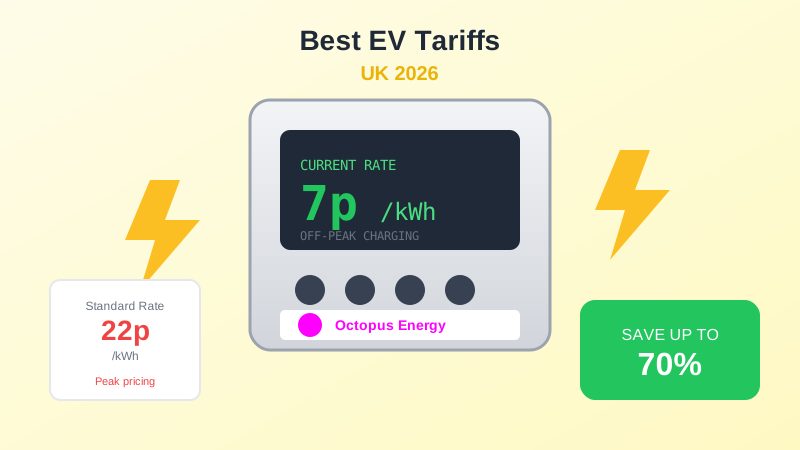
On a standard electricity tariff, you’re paying around 22p per kWh (as of January 2026 price cap). With an EV-specific tariff, you could pay as little as 7p per kWh during off-peak hours.
For a typical EV owner driving 10,000 miles per year:
- Standard rate (22p/kWh): ~£629/year charging cost
- EV tariff (7p/kWh off-peak): ~£200/year charging cost
- Annual saving: ~£429
That’s enough to cover your home charger installation in under two years!
Top EV Electricity Tariffs for 2026
1. Octopus Intelligent Go
Off-peak rate: 7p/kWh (during smart charging windows) Peak rate: ~22p/kWh Best for: Tesla and compatible EV owners
Intelligent Go is now the most popular EV tariff in the UK. Connect your compatible EV or charger, tell the app when you need the car ready, and it automatically schedules charging during the cheapest periods—which can extend beyond the standard 11:30pm-5:30am window.
Pros:
- Industry-leading off-peak rate
- Smart optimisation saves money
- Extended cheap charging windows
- Excellent app and customer service
Cons:
- Only works with compatible vehicles/chargers
- Requires app integration
2. Octopus Go
Off-peak rate: 7.5p/kWh (11:30pm to 5:30am) Peak rate: ~22p/kWh Best for: Most EV owners
Octopus Go is the benchmark EV tariff for those without compatible smart charging. Six hours of cheap electricity overnight is enough to fully charge most EVs from near-empty—more than enough for daily top-ups.
Pros:
- Simple to understand
- Works with any EV and charger
- No special hardware required
- Great customer service
Cons:
- Fixed off-peak window
- Needs smart meter
3. EDF GoElectric 35
Off-peak rate: 8.5p/kWh Peak rate: ~24p/kWh Best for: Those wanting EDF reliability
EDF’s EV tariff offers competitive off-peak rates with the backing of a major energy supplier. A solid choice for those who prefer larger suppliers.
Pros:
- Major supplier reliability
- Good customer service
- Competitive rates
Cons:
- Slightly higher than Octopus
- Fewer smart features
4. OVO Charge Anytime
Off-peak rate: Variable (typically 7-9p/kWh) Peak rate: Standard Best for: Smart charger owners
OVO’s offering integrates with smart chargers to automatically charge when electricity is cheapest. It uses a more dynamic pricing model that responds to wholesale electricity prices.
Pros:
- Dynamic pricing can mean very cheap charging
- Good smart home integration
- Carbon tracking features
Cons:
- Less predictable pricing
- Requires compatible hardware
5. British Gas Electric Drivers
Off-peak rate: ~9p/kWh Peak rate: ~25p/kWh Best for: Existing British Gas customers
British Gas offers an EV tariff for those who prefer sticking with a familiar supplier. While not the cheapest, it’s competitive and simple.
Pros:
- Major supplier
- Easy for existing customers
- Good app
Cons:
- Higher rates than specialists
- Fewer smart features
How to Choose the Right Tariff
Consider these factors:
1. Your Charging Patterns
If you can always charge overnight, simple off-peak tariffs like Octopus Go are perfect. If your schedule varies, smart tariffs offer more flexibility.
2. Your EV and Charger
Some tariffs require compatible hardware. Check compatibility before switching. Tesla, many VW Group vehicles, and several smart chargers work with Intelligent Go.
3. Your Household Usage
Remember, EV tariffs affect your whole electricity bill. If you use a lot of electricity during the day, a higher peak rate could offset your charging savings.
4. Smart Meter Requirement
Most EV tariffs require a smart meter. If you don’t have one, your supplier can install one for free, but there may be a wait.
Maximising Your Savings
Use Scheduled Charging
Most EVs and smart chargers let you schedule charging for off-peak hours. Set it once and forget it.
Consider Home Battery Storage
If you have solar panels, a home battery can store cheap overnight electricity for daytime use, maximising your savings.
Monitor Your Usage
Use your supplier’s app to track when you’re using electricity. You might find easy ways to shift usage to cheaper periods.
Combine with Solar
If you have solar panels, you can charge for free during sunny days and use cheap overnight rates as backup.
The Numbers: Real Savings Example
Let’s calculate savings for a typical scenario:
Driver profile:
- 10,000 miles per year
- EV efficiency: 3.5 miles per kWh
- 80% home charging
- 20% public rapid charging at 65p/kWh
Standard tariff (22p/kWh):
- Home charging: 2,286 kWh × £0.22 = £503
- Public charging: 571 kWh × £0.65 = £371
- Total: £874/year
Octopus Intelligent Go (7p/kWh):
- Home charging: 2,286 kWh × £0.07 = £160
- Public charging: 571 kWh × £0.65 = £371
- Total: £531/year
Annual saving: £343
Over a typical 5-year ownership period, that’s £1,715 saved just by choosing the right tariff!
How to Switch
Switching energy supplier is straightforward:
- Check you have (or can get) a smart meter
- Compare tariffs using a comparison site or go direct
- Apply online—the new supplier handles the switch
- Set up your EV’s charging schedule for off-peak hours
- Start saving!
The switch typically takes 2-3 weeks and your supply won’t be interrupted.
Conclusion
An EV-specific electricity tariff is one of the simplest ways to maximise the financial benefits of electric car ownership. With potential savings of £300-450 per year, it’s worth the few minutes it takes to switch.
For most people, Octopus Intelligent Go offers the best combination of low prices and smart features if you have a compatible vehicle. Otherwise, Octopus Go provides excellent value with its simple off-peak window.
Ready to calculate your total EV savings? Use our savings calculator to see the full picture.
Helping UK drivers make informed decisions about electric vehicles.
Advertisement
Advertisement